

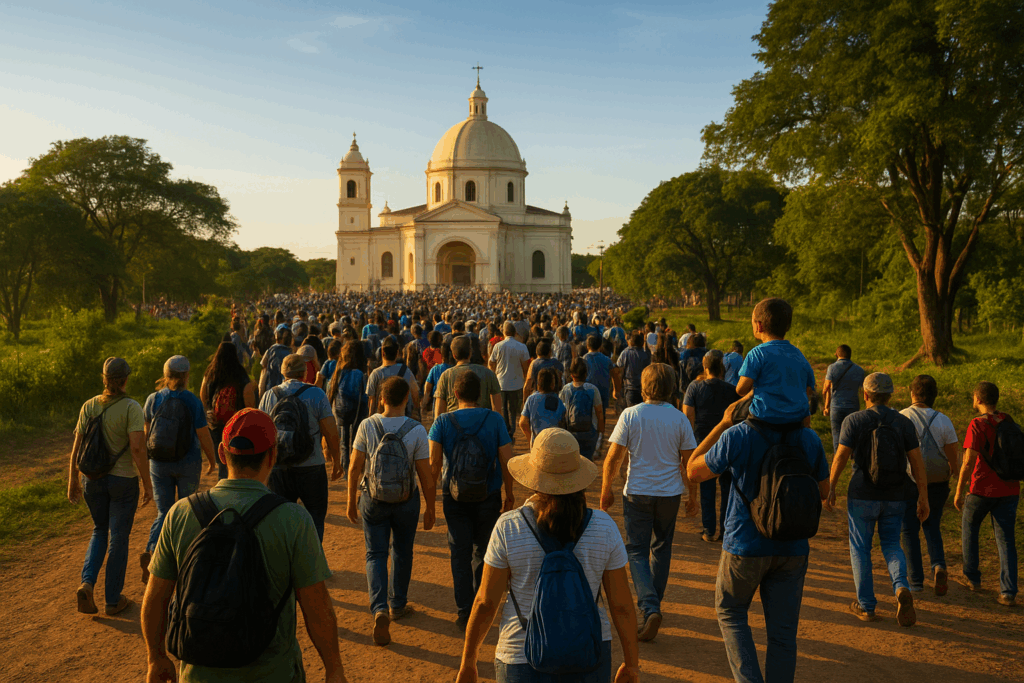
If you live in Paraguay, have ever visited the country in early December, or are thinking about discovering it as a new destination, one thing has likely caught your attention: the massive pilgrimage to Caacupé. Every year around December 8th, hundreds of thousands of people make their way to the Basilica of the “Virgen de los Milagros.” The pilgrimage to Caacupé is not only a religious celebration — it represents family, identity, and one of the most powerful cultural traditions in Paraguay.
Below you will discover why this event is so important, how it began, what happens during the famous Novenario, what people pray for, and why December 8th also marks the beginning of the Christmas season in many Paraguayan homes.
The Origins of the Pilgrimage to Caacupé
The pilgrimage to Caacupé dates back to the 18th century. According to tradition, the statue of the Virgin was carved by a Guaraní sculptor who was miraculously saved and created the image as an act of gratitude. The first church was consecrated in 1765, and from then on, Caacupé became Paraguay’s most important Marian shrine.
Over time, the pilgrimage evolved into a nationwide event. Families, youth groups, local communities, athletes, and people from every region travel to Caacupé — often walking for hours or days, cycling in groups, or driving in family caravans.
The Pilgrimage to Caacupé and the Novenario
Nine days before December 8th, Paraguay enters the Novenario, a period of spiritual preparation filled with daily Masses, candlelit processions, community prayers, music, and devotions. Many people attend services in their local parish each evening, while others travel directly to Caacupé to participate in the celebrations at the Basilica.
During these days, the city becomes a center of devotion and community spirit. The atmosphere is shaped by traditional songs, candlelight, solemn prayers, and countless personal moments of hope.
Why the Pilgrimage to Caacupé Matters
A Place of Gratitude
Many pilgrims come to thank the Virgin for blessings they have already received: recovery from illness, successful births, new job opportunities, or restored harmony within their families.
A Place of Hopes and Prayers
The most common intentions brought to Caacupé include:
- Health and healing
- Protection and well-being of the family
- Employment and financial stability
- Success in studies and examinations
- Peace within the home and the country
- Guidance for migration or travel
- Blessings for pregnancy and newborns
These prayers reflect the everyday realities of Paraguayans and highlight why December 8th carries such spiritual weight.
A Place of National Identity
Beyond faith, the pilgrimage is part of Paraguay’s identity. Even Paraguayans living abroad celebrate this day with special masses and feel especially connected to their homeland.
A Celebration of Colors, Music, and Family
The area around the Basilica turns into a vibrant, emotional gathering:
- Traditional food and drinks
- Music groups and choirs
- Stands with candles, rosaries, and flowers
- Families resting together along the road
- Friends walking side by side
- Elderly people fulfilling lifelong promises
- Cyclists and runners completing their annual tradition
Despite the huge crowds, the atmosphere is marked by respect, calmness, and a beautiful sense of community.
December 8th: The Beginning of Christmas in Paraguay
One of the most charming cultural traditions linked to this date is that many Paraguayans set up their Christmas tree on December 8th. The Day of the Virgin marks the symbolic start of the Christmas season. After returning from Caacupé, families gather to decorate, share a meal, and officially welcome the festive period.
For many, faith, gratitude, and the warmth of family come together on this day.
What the Pilgrimage to Caacupé Means for Paraguay
The pilgrimage to Caacupé is a living expression of Paraguayan culture. It blends spirituality, family values, community spirit, and centuries-old tradition. For locals, it is a moment of hope and connection. For visitors, it offers a rare, authentic window into the heart of Paraguay.
Conclusion
The pilgrimage to Caacupé is more than a religious event — it is a celebration of unity, gratitude, and tradition. Whether you are a resident or a traveler seeking to understand Paraguay more deeply, the days surrounding December 8th offer an unforgettable experience of devotion, culture, and community.
If you would like to learn more about Paraguay or the opportunities for long-term residence, ParaguayProfis is here to guide you.